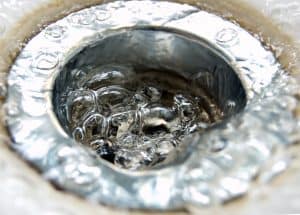

Standing gray water at the bottom of your dishwasher puts a damper on dishwashing, but you can often fix it yourself. Most clogs happen between the tub filter and where the drain hose connects under your sink. This guide walks you through simple steps to clear a clogged dishwasher, explains what causes the issue, and helps you determine when it is time to call a professional. If you need a helping hand, Streamline Plumbing provides quick, dependable drain clearing services in Raleigh and Cary.
What Causes a Clogged Dishwasher?
Most dishwasher clogs are caused by six common problems. Finding the root cause saves you time and money on a clogged dishwasher fix.
- Food scraps and grease. Leftover food settles directly into the filter, and warm grease flows down the drain and solidifies as it cools. If the scraps and grease aren’t cleared regularly, they can form a stubborn blockage over time.
- A full garbage disposal. Your dishwasher drains into the same outlet as your disposal. If the disposal is full or jammed, wastewater can’t exit and flows back, flooding your space.
- A clogged filter. The mesh filter in the floor of the tub traps food particles every cycle. Without regular cleaning, it mats over and completely stops drainage.
- A kinked drain hose. The hose connecting the pump to your sink drain can get pinched behind cabinets or build up thick grease along its interior walls, leading to clogs later on.
- A blocked air gap. If your sink counter has an air gap, it prevents dirty water from back-siphoning into your dishes. When food clogs this fitting, though, drainage slows down, leading to potential blockages over time.
- A failed drain pump or valve. The check valve keeps wastewater from flowing back into the machine. If the valve gets stuck or the pump motor fails, water remains trapped in the basin.
Signs Your Dishwasher Is Clogging (or Already Clogged)
- Standing water in the tub. An inch or two of dirty water after a cycle indicates a restricted drain path or a pump that is running without moving water.
- Gurgling sounds at the sink. Hearing gurgling noises from your sink drain means air is struggling to escape through standing water in the shared line.
- Water rising in your sink basin. If water backs up into your sink while the dishwasher drains, the blockage sits deeper in your shared plumbing line.
How Does a Dishwasher Drain?
Your dishwasher uses a small electric pump to push dirty water out through a flexible drain hose. This hose usually connects directly to your garbage disposal or kitchen sink drain. Because your dishwasher and sink share the same drainage path, a blockage in your disposal or main pipe will cause water to back up into the machine. That’s why most drainage problems we see on residential calls occur at the filter, hose, or disposal unit.
Dishwasher Clog Supply List
Ready to unclog your dishwasher? Grab towels, a small cup for scooping, screwdrivers, rubber gloves, baking soda, and white vinegar. We generally recommend that you avoid harsh chemical drain cleaners, as they can damage plastic components and rubber seals inside your machine.
How to Unclog a Dishwasher, Step-by-Step
Work through these simple steps in order to clear most dishwashers quickly and safely.
Stay safe, always. Turn off power to the appliance at your circuit breaker before reaching into standing water to unclog a dishwasher.
Run the garbage disposal. Turn on cold water and run your disposal for 30 seconds. Clearing food out of the unit often opens the drainage route instantly. If your unit only hums, contact our Raleigh garbage disposal repair experts for help.
Scoop out standing water. Bail out pooled water using a cup and dry the tub with towels. Working in a dry basin makes it easier to inspect internal components.
Clean the filter assembly. Twist out the mesh filter at the bottom of the tub and scrub it under warm running water with an old toothbrush to remove trapped food debris.
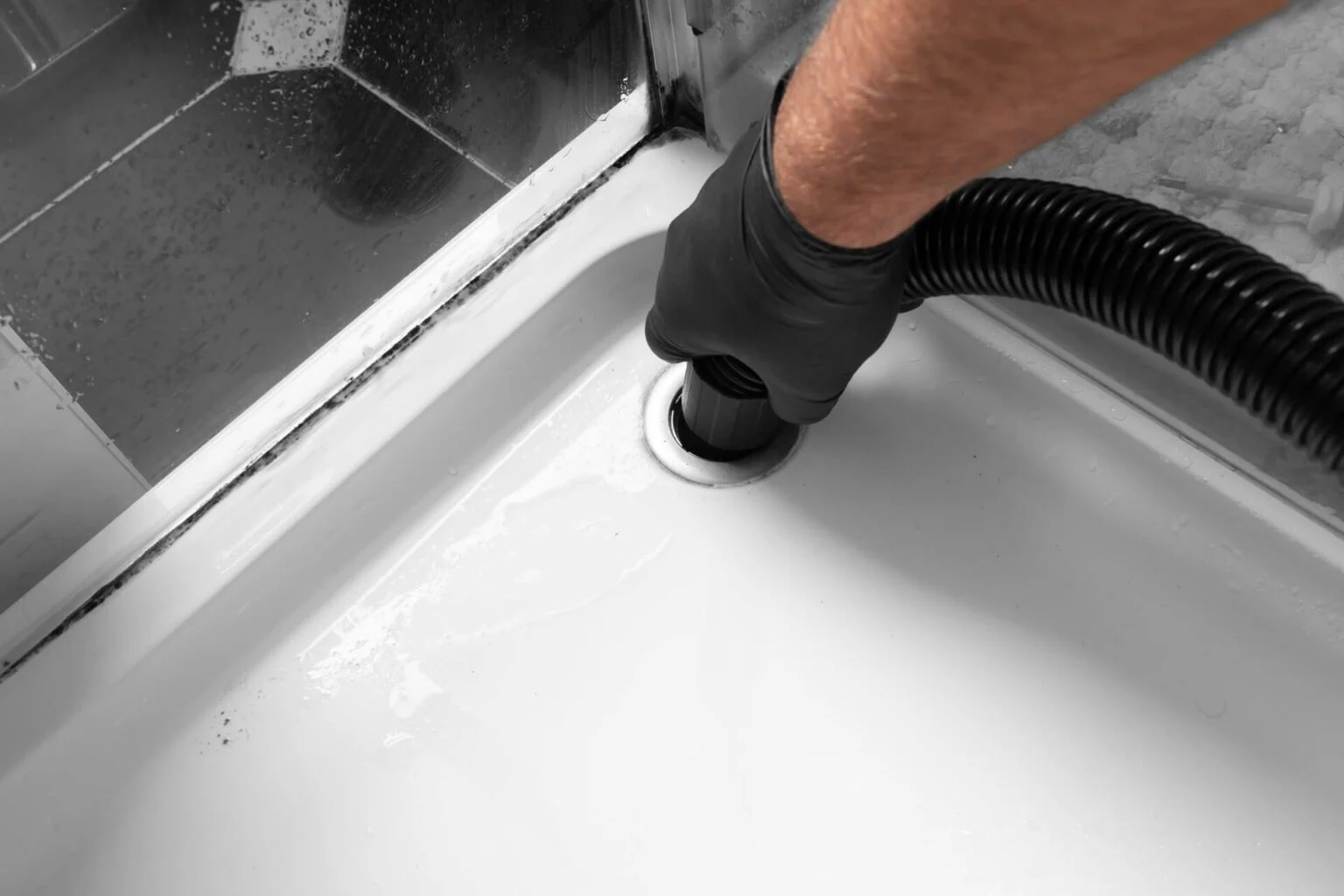
Clear the drain sump. Look into the sump basin below the filter. Put on gloves and carefully lift out any remaining food particles, paper labels, or broken glass pieces by hand.
Inspect the drain hose. Check the flexible hose under your sink for kinks or bends. Make sure it loops high under the countertop before connecting to the disposal, which keeps sink water from siphoning into your dishwasher.
Flush with vinegar and baking soda. Pour one cup of baking soda into the tub drain, followed by one cup of white vinegar. Let the mixture fizz for 15 minutes, then flush with hot water to dissolve soft grease buildup.
Clean the air gap fitting. If your sink setup includes a countertop air gap, remove its chrome cover and clean out any trapped food debris using a small bottle brush.
Run a short test cycle. Turn the power back on and start a quick rinse cycle. If the tub drains completely, your job is complete! If water continues to pool, the blockage lies further down your main plumbing line.
Don’t make the leak worse. Never pull the dishwasher out from under your cabinets, disassemble electrical pump parts, or run drain snakes into the plastic tub drain, as this can damage watertight seals.
When Should You Call a Plumber For Your Clogged Dishwasher?
If you still see standing water after trying these troubleshooting steps, or if your sink backs up whenever the dishwasher empties, it’s time to call a professional plumber. A shared backup suggests a clog inside your main house drain pipes, rather than an issue with the appliance itself.
Looking to fix a clogged dishwasher? Our licensed drain clearing and hydrojetting specialists serve homeowners throughout Raleigh and Cary. Contact us today to book your free estimate.
How Much Does it Cost to Fix a Dishwasher Clog?
Clearing simple filter or disposal clogs yourself costs practically nothing. If mechanical parts fail, however, and you need to replace them, repair costs depend on the required fix. According to Angi’s repair cost guide, clearing standard appliance drain lines ranges from $100 to $250, replacing a drain hose costs $75 to $130, and installing a new drain pump runs between $150 and $350.
How Do You Keep a Dishwasher From Clogging Again?
- Scrape dishes thoroughly. Scrape food scraps into the trash before loading dishes. Keeping large solids out of your drainage system keeps your filter from clogging up quickly.
- Run the disposal first. Running your disposal with cold water for a few seconds before starting a wash cycle opens up the line and clears the trap.
- Dispose of grease properly. Pour cooled oil into containers and toss them into the garbage. Raleigh Water reminds residents that fats, oils, and grease cool and cause major blockages in local and residential sewer lines.
Pouring a cup of white vinegar into an empty hot cycle once a month helps dissolve soft grease before it hardens. According to the Raleigh Water Quality Report, local water in Raleigh and Cary is naturally soft, meaning grease, not mineral scale, is almost always the primary cause of kitchen clogs.
Clogged Dishwasher FAQs
Can I use Drano in my dishwasher?
No, you shouldn’t use Drano in the dishwasher. Chemical drain cleaners can corrode internal rubber seals, plastic drain hoses, and pump components. Use baking soda, vinegar, and manual filter cleaning instead.
Why is there standing water in the bottom of my dishwasher?
Standing water indicates wastewater cannot escape past the filter, hose, or disposal outlet. If these areas are clean, the issue points back to a jammed check valve or a faulty drain pump motor.
My filter is clean and it still won’t drain. What now?
Inspect the garbage disposal, flexible drain hose, and countertop air gap. If all three are clear, the clog is likely located in your main drain pipe. Additionally, your drain pump motor needs professional replacement.
Does a clogged dishwasher mean my main drain line is blocked?
Not necessarily. A dirty filter can cause standing water even if the rest of your plumbing functions normally. However, if your sink backs up whenever the dishwasher drains, the shared main line is blocked.
Get Your Dishwasher Draining Again With Streamline
Most dishwasher clogs can be resolved with simple steps like clearing the disposal, washing the filter, or checking the drain hose. If standing water persists or your sink backs up, Streamline Plumbing is here to help. We provide fast, reliable drain clearing services throughout Raleigh, Cary, and the Triangle area; offering professional support that leaves you with a fix built to last. Call (919) 263-5221 to book your free estimate, or schedule your service online today!Founded in 2001, Streamline Services specializes in plumbing, electrical, heating, and cooling solutions across the Triangle region, including Raleigh, Durham, and Chapel Hill. Under Bob’s leadership, the company has built a reputation for reliability, professionalism, and community engagement. As a licensed contractor, Bob holds North Carolina plumbing license #23908 ensuring that Streamline Services meets the highest industry standards. Beyond his role at Streamline Services, Bob is actively involved in the Plumbing-Heating-Cooling Contractors (PHCC) of North Carolina. He serves as the President of the Triangle Chapter and member of the Board of Directors for North Carolina, where he collaborates with industry peers to promote education, safety, and advocacy within the trade. phccnc.com

Written by
Bob Sweet
Bob Sweet is the President and Owner of Streamline Services, a fifth-generation, family-owned company based in Durham, North Carolina. Founded in 2001, Streamline Services specializes in plumbing, electrical, heating, and cooling solutions across the Triangle region, including Raleigh, Durham, and Chapel Hill. Under Bob’s leadership, the company has built a reputation for reliability, professionalism, and community engagement. As a licensed contractor, Bob holds North Carolina plumbing license #23908 ensuring that Streamline Services meets the highest industry standards.