
AC Running But Not Cooling? Here’s What’s Actually Going On
It’s 94 degrees outside. Your system has been running for two hours straight. You walk over to the thermostat and it still reads 81. The vents are blowing air—you can feel it—but the house refuses to cool down.
If your AC is running but not cooling, you are not alone. This is one of the most common service calls Streamline Services receives every summer across Raleigh, Durham, Cary, and the wider Triangle. The good news: some causes are things you can check yourself in five minutes. Others require a licensed technician. This guide helps you tell the difference—quickly—so you are not running a compromised system any longer than necessary.
Quick Answer
An AC running but not cooling is most commonly caused by low refrigerant from a leak, a dirty or frozen evaporator coil, a dirty condenser coil on the outdoor unit, a failed capacitor, or duct leaks losing conditioned air before it reaches your living space. Start with your thermostat settings and air filter before calling anyone—those two checks resolve more calls than you would expect.
Start Here: Two Things You Can Check in 5 Minutes
Before you assume the worst about your AC running but not cooling, run through these two checks. They cost you nothing and resolve a surprising number of cooling issues across the Triangle area.
1. Is Your Thermostat Set to “Auto” or “On”?
This sounds too simple. It isn’t. When the fan setting is switched to “on,” the blower runs continuously—even when the system is not actively cooling the air. The result is a stream of room-temperature or slightly warm air blowing out of your vents, making it feel like the AC is running but producing nothing.
Check your thermostat and confirm two things: the mode is set to “cool” (not “heat” or “fan only”), and the fan setting is set to “auto” rather than “on.” Auto means the blower only runs during active cooling cycles. Once you make the switch, give the system 10 to 15 minutes to respond before drawing any conclusions.
2. Take a Moment and Think: When Did You Last Change the Air Filter?
A clogged air filter is one of the most common reasons a running AC fails to cool a home. When the filter is packed with dust, pet hair, and debris, airflow across the evaporator coil drops to the point where the coil cannot absorb heat properly—and in severe cases, it freezes over entirely, blocking airflow even further.
Not sure if your filter is the problem? Pull the filter out and hold it up to a light source. If you cannot see light through it, replace it now. Standard 1-inch filters should be replaced every 30 to 90 days depending on your household. If the filter is clean and the thermostat checks out, you have a real diagnosis problem—keep reading.
Before calling anyone, check two things: confirm your thermostat fan is set to “auto” (not “on”), and pull your air filter to see if it needs replacing. These two steps resolve a significant share of “AC running but not cooling” calls in Raleigh, Durham, and Cary homes every summer—and both take under five minutes.
AC Running But (Still) Not Cooling: The Most Likely Culprits
These are the causes that account for the vast majority of “AC running but not cooling” calls we get in the Triangle—ordered by how often we run into them.
Low Refrigerant From a Leak
Refrigerant is the component of your AC that actually removes heat from your home’s air. When the refrigerant level drops—because of a leak in the coils, line set, or fittings—the system loses its ability to transfer heat effectively. Sure, the compressor keeps running and the fan keeps blowing. But the air coming out of your vents never gets cold enough to make a dent in room temperature.
Signs of low refrigerant include: air from vents that’s coming out cool (but not cold), ice buildup on the refrigerant lines near the outdoor unit, a hissing or bubbling sound near the indoor or outdoor unit, and a system that runs constantly but cannot reach the thermostat setpoint.
Anything related to your refrigerant is not a DIY repair. Refrigerant handling requires EPA Section 608 certification. Even if it didn’t, adding refrigerant without finding and fixing the leak first is a temporary patch that fails again quickly. A licensed technician can safely locate the leak, repair it, and recharge to the manufacturer’s specification. If you are in the Raleigh-Durham area and suspect a refrigerant leak, our AC repair team can diagnose it the same day you call.
Dirty or Frozen Evaporator Coils
The evaporator coil sits inside your air handler, and is where the refrigerant absorbs heat from your home’s air. Over time, dust and debris accumulate on the coil’s fins, acting as insulation that blocks heat transfer. When airflow is restricted enough—by a dirty coil, a clogged filter, or both—the coil surface temperature drops below freezing and ice begins to form.
A frozen evaporator coil is particularly relevant in the Triangle during spring, when pollen loads are among the highest in the country. That pollen works its way through filters and coats coil surfaces quickly. If your system is blowing air that seems only slightly cooler than room temperature, or if you notice ice anywhere on the indoor unit or refrigerant lines, turn the system off and switch the fan to “on” to allow the coil to defrost—then call a technician to clean the coil and identify what allowed it to freeze in the first place.
Dirty Condenser Coils on the Outdoor Unit
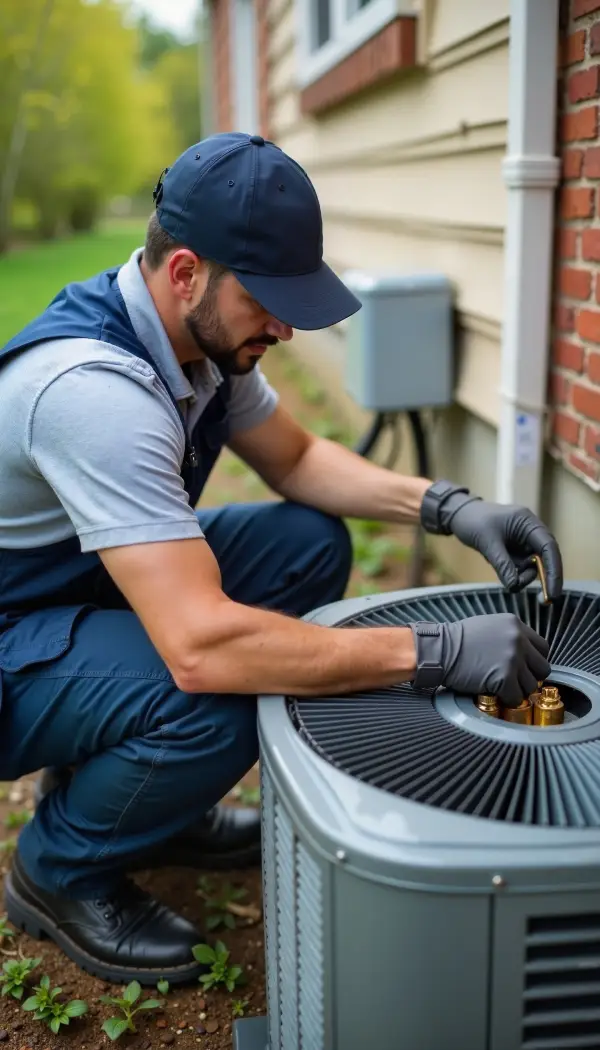
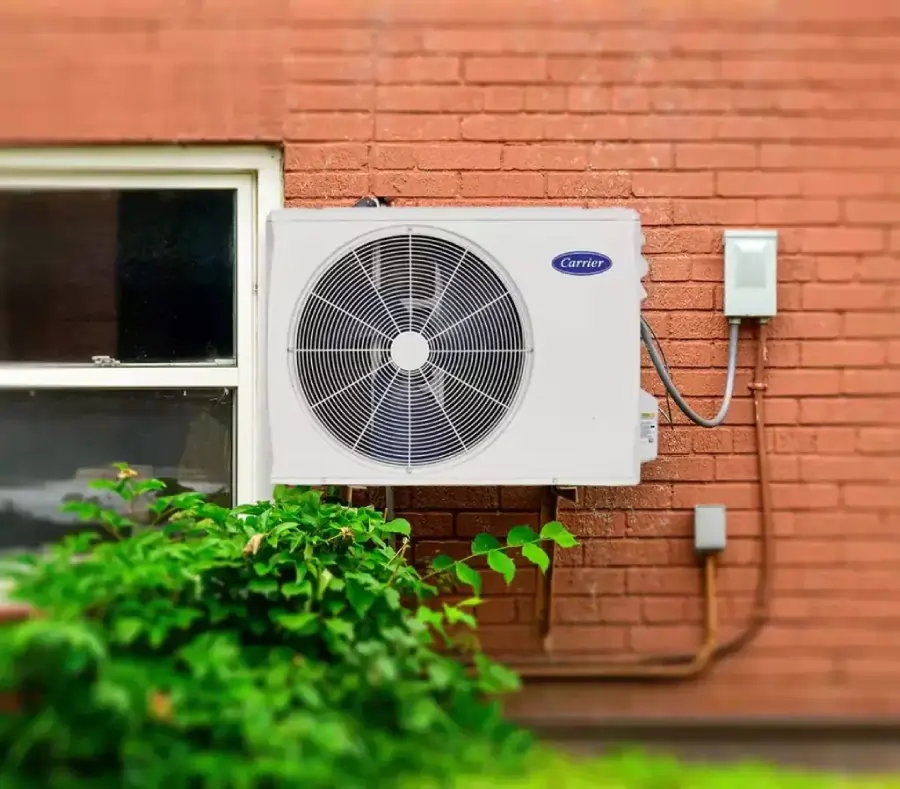
The outdoor condenser unit is where your system releases the heat it extracted from your home into the outside air. The condenser coil wraps around the outside of the cabinet and works by pulling outdoor air through its fins. When those fins are coated with cottonwood fluff, pollen, grass clippings, or a season’s worth of accumulated debris, heat rejection drops dramatically—and the system runs hotter, works harder, and cools less.
This is a Triangle-specific problem more than most homeowners realize. The combination of spring cottonwood season and summer pollen loads means outdoor units here accumulate coil debris faster than in drier climates. You can rinse the exterior of the coil gently with a garden hose (always from the inside out, never a pressure washer), but professional coil cleaning with appropriate chemicals is more thorough and part of every annual tune-up from Streamline Services.
Failed Capacitor or Contactor
Capacitors and contactors are the electrical components that start and run the compressor and fan motors in your outdoor unit. When a run capacitor fails, the motor it supports either cannot start or runs weakly—meaning the system may appear to be operating (the thermostat is calling, the indoor blower is running) while the compressor is actually not cycling at all.
Capacitor failure is the single most common AC repair in the Triangle during summer months—high ambient temperatures around outdoor units, combined with the electrical stress of constant cycling, wear them out quickly. If your outdoor unit is running but unusually quiet, or if only the fan is spinning while the compressor is silent, a failed capacitor is the likely culprit. It is an inexpensive part and a fast repair when a technician gets there with the right replacement on the truck.
Duct Leaks Sending Conditioned Air Into Your Attic or Crawl Space
This cause is easy to overlook because the system itself is working perfectly—the problem is that conditioned air never reaches the living space. Studies from the Department of Energy estimate that the average forced-air system loses 20 to 30 percent of conditioned air through duct leaks, and in older Triangle homes where ductwork runs through hot attic spaces, that percentage can be even higher.
Symptoms include rooms that never reach the set temperature even when adjacent rooms are comfortable, higher-than-expected energy bills, and a system that runs almost continuously without cycling off. Duct leaks are diagnosed with a professional pressure test and repaired by sealing joints and connections—not duct tape, which fails quickly in attic heat, but mastic sealant or purpose-built foil tape applied by a technician. Our HVAC repair team includes duct assessment as part of any diagnostic call where the system performance does not match the equipment’s rated capacity.
The five most common reasons an AC runs without cooling—in order of frequency across Triangle homes—are a refrigerant leak, a frozen or fouled evaporator coil, a debris-coated condenser coil, a failed capacitor, and duct leaks losing conditioned air to the attic or crawl space. Of these, only the thermostat and filter checks are DIY-safe. Refrigerant, coil cleaning, capacitor replacement, and duct sealing all require a licensed technician. Call our AC repair team for same-day diagnosis across the Triangle.
A Note About Triangle Summers
Most residential AC equipment is sized and rated to maintain approximately a 20-degree temperature differential between indoor and outdoor conditions. When it;s 95 degrees outside with 85 percent relative humidity—a routine August afternoon in Raleigh or Durham—a system designed to that standard is being asked to hold 75 degrees indoors under conditions that push the limits of its design envelope. This means that if your thermostat is set to 72 and the house is sitting at 76, despite the system running constantly, you’re not necessarily dealing with a broken system. You may be a system working at its thermal limit during conditions that exceed its design parameters.
Understanding this difference saves homeowners from unnecessary replacement quotes and helps technicians focus on actual failures rather than weather-driven performance gaps.
Most residential AC systems are designed to maintain roughly a 20-degree indoor-to-outdoor temperature difference. On a 95-degree Raleigh or Durham afternoon with 85 percent humidity, a correctly functioning system may still struggle to hold 72 degrees indoors—that is a design condition issue, not a broken system. If your AC cannot maintain setpoint on an 85-degree day, that is when something mechanical warrants a diagnostic call to our HVAC repair team.
When to Turn the System Off and Call a Pro
Running a compromised AC system doesn’t just disrupt your home’s cool and comfortable atmosphere—it can turn a small repair into a compressor replacement, which is the most expensive repair in residential HVAC.
Turn the system off and call immediately if any of the following apply:
- Ice is visible on the indoor unit, the refrigerant lines, or anywhere on the outdoor unit during cooling operation
- You hear grinding, banging, screeching, or a repeated clicking sound when the outdoor unit attempts to start
- The outdoor unit is not running at all—no compressor sound, no fan—while the indoor blower is operating
- You smell burning electrical components near the indoor air handler or the outdoor unit
- The circuit breaker for the AC trips immediately upon reset
In all of these situations, continuing to run the system risks compressor damage. Switch the thermostat to “off” (not just “fan”), call (919) 263-5221, and our technicians can typically reach Triangle homes the same day.
Refrigerant kits marketed to homeowners may temporarily raise system pressure, but without locating and repairing the leak, the refrigerant will escape again—and overcharging a system causes compressor damage. EPA Section 608 certification is required to purchase and handle refrigerants legally. This is not a DIY repair.
Turn your AC off immediately if you see ice on the unit or lines, hear grinding or banging from the outdoor unit, notice the outdoor unit is completely silent while the indoor blower runs, or smell burning near the air handler. Continuing to operate a system under any of these conditions risks compressor failure—the single most expensive repair in residential HVAC. Call (919) 263-5221 for same-day service across Raleigh, Durham, Cary, and the Triangle.
How to Prevent AC Issues Next Summer
Every cause in this guide—low refrigerant, dirty coils, failed capacitors, restricted airflow—is caught during a professional annual tune-up before it becomes a mid-summer breakdown. A single maintenance visit from Streamline Services covers:
- Refrigerant level check and leak inspection
- Evaporator and condenser coil cleaning
- Capacitor and contactor testing and replacement if marginal
- Filter assessment and replacement recommendation
- Electrical connections tightened and inspected
- Blower motor and belt inspection
- Thermostat calibration verification
The best time for a Triangle AC tune-up is early spring—before pollen season coats the condenser coil and before the first heat wave of the year arrives. Our AC maintenance service is available as a standalone appointment or as part of the Streamline Family Plan, which bundles annual heating and cooling maintenance with priority scheduling and member discounts on repairs. If your system is older than 10 years and has never had a professional maintenance visit, scheduling one now is the single highest-return investment you can make in your home’s comfort.
An annual professional tune-up catches refrigerant leaks, cleans both coils, tests capacitors, and clears airflow restrictions before any of them become a mid-summer emergency. The best time to schedule AC maintenance in the Triangle is early spring—before pollen season and before the first heat wave. One visit covers every root cause covered in this article.
Frequently Asked Questions
Why is my AC running but not cooling the house below 80 degrees?
If your AC cannot bring the house below 80 even when running continuously, the most likely causes are low refrigerant from a leak, a frozen or dirty evaporator coil severely restricting airflow, or an undersized system being pushed beyond its design conditions during extreme heat. Start by checking your filter and thermostat settings. If those are fine and the system still will not cool, this warrants a same-day diagnostic call—continued operation under these conditions risks compressor damage.
Why is my AC blowing warm air?
Air that is blowing out warm typically means the refrigerant circuit is not functioning correctly, the evaporator coil is frozen or heavily fouled, or the compressor is not actually running despite the fan operating. Check whether the outdoor unit’s compressor is running (you should hear a low hum from the compressor in addition to the fan). If only the fan is spinning, a failed capacitor is the most likely cause and is a quick repair for a technician.
Should I turn off my AC if it is not cooling properly?
If you see ice forming on the unit or lines, hear unusual mechanical sounds, or the outdoor unit is not running while the indoor blower is, yes—turn it off and call a technician. Running a compromised system risks compressor failure. If the system is cooling somewhat but not reaching setpoint during extreme heat, it is generally safe to leave it running while you wait for service, but monitor it for any of the above warning signs.
How long does it take for AC to cool a house in the Triangle?
A properly functioning system in the Triangle should be able to drop indoor temperature by roughly one degree every 15 to 20 minutes under normal summer conditions. If your home has been at 85 degrees all day with the system off, expect 2 to 3 hours to reach a comfortable setpoint—that is normal recovery time, not a system failure. If the system has been running for more than 3 hours and the temperature has barely moved, there is a mechanical issue.
Is it worth repairing an AC that is not cooling, or should I replace it?
A useful rule of thumb: if the repair cost exceeds 50 percent of the cost of a comparable new system, and the existing unit is more than 10 years old, replacement often provides better long-term value. A capacitor replacement on a 7-year-old system is worth it every time. A compressor replacement on a 14-year-old R-22 system is a much harder call. Streamline Services provides honest assessments of system age and condition on every AC repair call so you can make an informed decision—not one based on a technician’s repair quota.
Why does my AC only struggle to cool on the hottest days?
This is usually a sizing issue, a refrigerant level that is marginally low (enough to reduce capacity without stopping cooling entirely), or dirty condenser coils that perform adequately under moderate load but lose enough efficiency under peak demand to fall short. If the system handles 85-degree days fine but cannot keep up at 95, a professional diagnostic can tell you whether it is a fixable issue or a system design limitation.
If your AC is blowing but not cold, check the outdoor unit—if only the fan is spinning with no compressor hum, a failed capacitor is likely the cause and is a fast, inexpensive fix. If the house will not cool below 80 on a mild day, that points to a refrigerant or coil issue that warrants a same-day call. On extreme-heat days above 95°F, even a properly functioning Triangle system may fall short of the thermostat setpoint—that is not always a broken system, but our HVAC repair team can tell you for certain.
AC Running But Not Cooling? Streamline Services Can Help Today
Streamline Services has been diagnosing and repairing AC systems for Triangle families for four generations. If your system is running but not cooling—whether the cause is a refrigerant leak, a failed capacitor, dirty coils, or something else entirely—our licensed technicians carry the diagnostic tools and replacement parts to solve it the same day you call.We serve Raleigh, Durham, Cary, Chapel Hill, Fuquay-Varina, Holly Springs, Apex, and surrounding Triangle communities, 24 hours a day, 7 days a week, 365 days a year. No vague arrival windows. No upcharges you did not agree to. Just an honest diagnosis and a repair that holds.
Call us at (919) 263-5221 or schedule your service appointment online. Same-day availability for most Triangle locations.
Founded in 2001, Streamline Services specializes in plumbing, electrical, heating, and cooling solutions across the Triangle region, including Raleigh, Durham, and Chapel Hill. Under Bob’s leadership, the company has built a reputation for reliability, professionalism, and community engagement. As a licensed contractor, Bob holds North Carolina plumbing license #23908 ensuring that Streamline Services meets the highest industry standards. Beyond his role at Streamline Services, Bob is actively involved in the Plumbing-Heating-Cooling Contractors (PHCC) of North Carolina. He serves as the President of the Triangle Chapter and member of the Board of Directors for North Carolina, where he collaborates with industry peers to promote education, safety, and advocacy within the trade. phccnc.com

Written by
Bob Sweet
Bob Sweet is the President and Owner of Streamline Services, a fifth-generation, family-owned company based in Durham, North Carolina. Founded in 2001, Streamline Services specializes in plumbing, electrical, heating, and cooling solutions across the Triangle region, including Raleigh, Durham, and Chapel Hill. Under Bob’s leadership, the company has built a reputation for reliability, professionalism, and community engagement. As a licensed contractor, Bob holds North Carolina plumbing license #23908 ensuring that Streamline Services meets the highest industry standards.