
A traditional water heater stops being a background appliance the day it fails—and in a Triangle home, that day is usually a Saturday, in February, after the third lukewarm shower. If your current tank is aging out, struggling against the Piedmont’s hard water, or pushing your Duke Energy bill higher every season, a tankless water heater is worth a real look.
Tankless systems run more efficiently than storage tanks, last roughly twice as long, and free up serious square footage in the closet or garage where your tank lives now. This guide covers how tankless compares to traditional, the pros and cons specific to NC homes, the clearest signs your water heater needs replacement, and what professional installation looks like across the Triangle.
How a Tankless Water Heater Actually Works
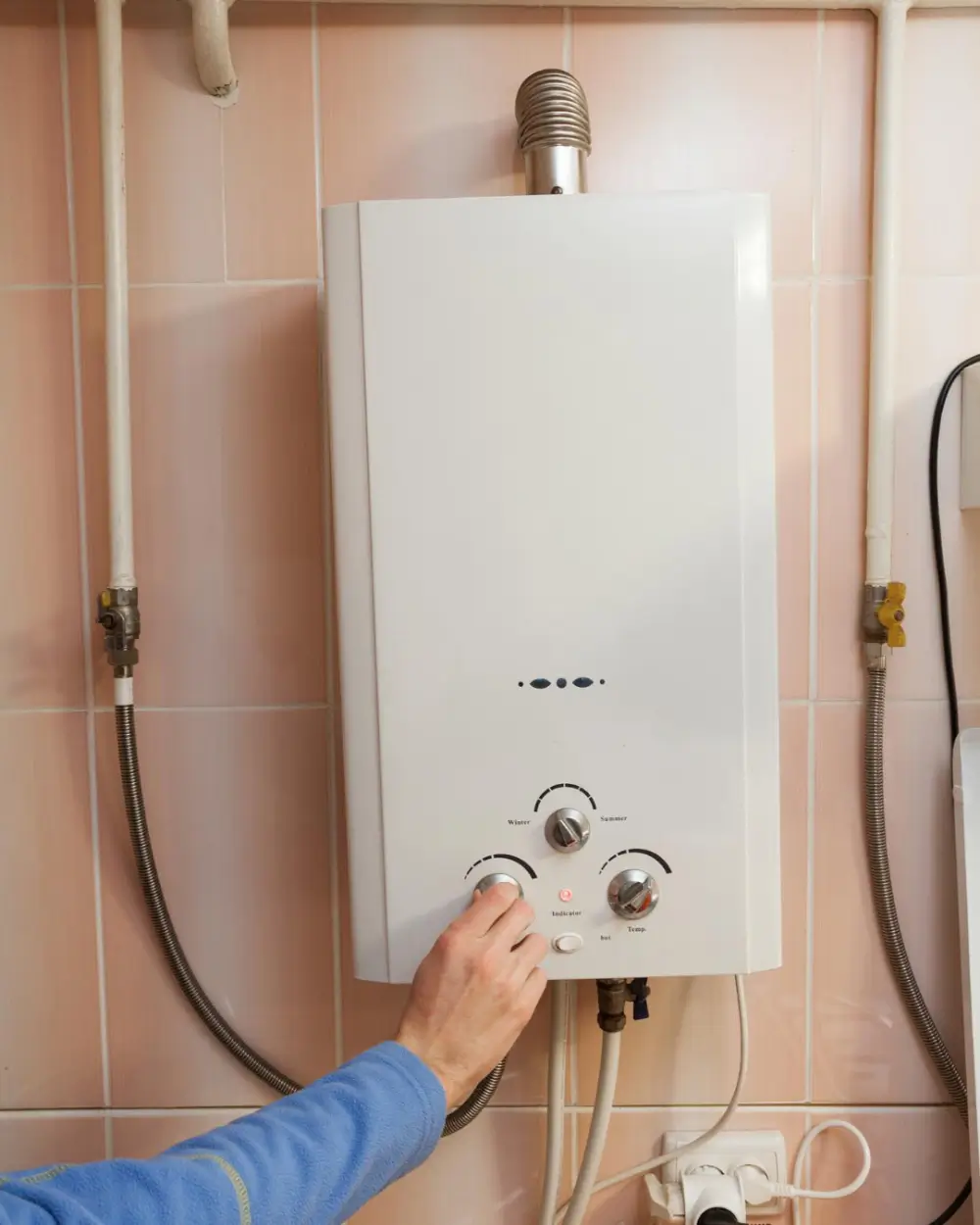
A tankless water heater—sometimes called an on-demand or instantaneous water heater—heats water only when you turn on the tap. There’s no storage tank, no constant standby loss, and no running out of hot water mid-shower because the supply is heated continuously through a high-efficiency heat exchanger as it flows toward the fixture.
The U.S. Department of Energy notes this on-demand approach is typically 24 to 34 percent more energy-efficient than a conventional storage tank in homes that use less than 41 gallons of hot water per day—which describes most NC households.
Tankless vs. Traditional Water Heater—What NC Homeowners Should Know
The core difference between a tankless system and a traditional water heater is storage. Traditional tanks hold 40 to 80 gallons of hot water and reheat it on a cycle to maintain temperature, whether you’re using it or not. Tankless units heat water only on demand, eliminating standby energy loss completely.
Here’s how the two stack up for an NC home:
- Lifespan: Traditional tanks last 8 to 12 years. Tankless units last 20+ years with proper maintenance.
- Efficiency: Tankless wins consistently, especially in moderate-demand households.
- Footprint: Tankless units mount on the wall and reclaim the closet, garage corner, or basement space a traditional tank takes up.
- Hot water supply: Tankless delivers continuous hot water. A tank runs out.
- Upfront cost: Tankless costs more day-one but typically recovers the difference over its working life through energy savings and a longer replacement cycle.
For NC homeowners weighing the long-term math, tankless usually wins—especially in households running hot water across multiple fixtures throughout the day.
Tankless systems run continuously on demand and eliminate the standby energy loss that comes with a storage tank.
Tankless units last roughly twice as long as traditional tanks and free up the closet, garage, or basement space the old tank occupied.
The Pros of Going Tankless in a North Carolina Home
Beyond the headline efficiency numbers, several factors make tankless especially well-suited to NC homes.
NC Winters Are Mild Enough to Maximize Tankless Efficiency
Tankless units work hardest when groundwater inlet temperatures are very cold. The Triangle’s relatively mild winter groundwater temperatures keep tankless heaters in their efficiency sweet spot most of the year—better real-world performance than a colder climate would deliver.
Recovered Space Matters in Newer Triangle Builds
Many homes built across Raleigh, Cary, and the surrounding suburbs over the past 15 years sacrifice utility space for open-concept living. A wall-mounted tankless system gives a closet or laundry room back.
Longer Lifespan Reduces Replacement Frequency
With the Piedmont’s hard water shortening tank life, switching to tankless with proper maintenance often means one replacement cycle instead of two.
If you’re a homeowner weighing the best water heater for NC homes, tankless matches both the climate and the way modern households actually use hot water.
The Cons Worth Knowing Before You Commit
A tankless system isn’t right for every home. Three considerations are worth being honest about:
Upfront Cost Is Higher
A tankless system costs more to purchase and install than a traditional tank. Tankless water heater cost is recovered over time through lower energy bills and a longer lifespan, but the day-one number is real and worth factoring into your decision.
Hard Water Requires Routine Maintenance
The Triangle’s water has enough mineral content to scale a tankless heat exchanger over time. Annual descaling is essential to maintain efficiency and warranty coverage.
Flow Rate Has Limits
A single tankless unit has a maximum flow rate. A large household running the shower, dishwasher, and washing machine simultaneously can outrun an undersized unit. Proper sizing eliminates the risk.
Signs It’s Time to Upgrade Your Water Heater
Whether you go tankless or stay with a traditional tank, these are the clearest indicators that your current water heater is nearing the end of its useful life:
- Age.
- Rusty or discolored hot water.
- Inconsistent temperatures.
- Visible corrosion or weeping at the tank base.
- Standing water around the unit.
- Popping, rumbling, or banging during operation.
- Climbing energy bills with no other explanation.
- Repair costs adding up.
If you’re seeing two or more of these signs, getting an estimate now is far cheaper than getting one after a Saturday-morning failure.
If you’re dealing with rusty hot water, inconsistent temperature, and climbing energy bills, your water heater is likely nearing failure. Replacing on your schedule beats replacing on an emergency timeline.
What Tankless Water Heater Installation Looks Like in NC
Tankless installation is more involved than swapping out a traditional tank. The process typically includes:
- A complete in-home assessment to confirm proper sizing based on your fixture count and hot water usage patterns
- Gas line evaluation to confirm capacity supports a high-BTU tankless burner, with upgrades pulled when needed
- Venting installation—tankless units require dedicated stainless steel or polypropylene venting different from a traditional tank
- Electrical and water line connections rebuilt to the new unit’s specifications
- Municipal permit handling, with inspection coordination
- Full commissioning and testing before the install team leaves
A licensed plumber should always handle the install—improper venting, gas line work, or sizing creates safety risks and voids manufacturer warranties. At Streamline, NC License #23908 P-1 covers every tankless project, and the team handles every step from sizing through final inspection.
After install, the tankless water heater maintenance team in Raleigh handles annual descaling so the unit reaches its full lifespan.
Frequently Asked Questions About Tankless Water Heaters in NC
Is a tankless water heater worth it in North Carolina?
For most NC households, yes. The Triangle’s mild groundwater temperatures keep tankless units in their efficiency sweet spot most of the year, and the 20+ year lifespan typically means one replacement cycle instead of two. Homes with moderate-to-high hot water usage see the strongest return.
How long does tankless installation take?
Tankless installation generally takes one to two days, depending on the gas line, electrical, and venting modifications required. Streamline gives you a realistic timeline during the in-home assessment.
Can I install a tankless system myself?
No. Tankless installation involves gas, electrical, venting, and permitting work that all require a licensed plumber in North Carolina. DIY installs create safety risks and void both equipment warranties and homeowners insurance coverage.
What size tankless unit do I need for a Triangle home?
Tankless unit sizing depends on your home’s peak simultaneous hot water demand. A licensed plumber calculates flow rate and temperature rise during the in-home estimate to size the unit correctly.
Get a Free Tankless Water Heater Estimate Across the Triangle
Streamline Services installs tankless systems throughout Raleigh, Durham, Cary, Holly Springs, Wake Forest, Apex, Chapel Hill, and the surrounding Triangle communities. Certified plumbers handle every step—sizing, gas line and venting work, permits, install, and commissioning—backed by NC License #23908 P-1 and 4.9 stars across 4,100+ Google reviews.
Streamline Services Can Help Today
If your tank is aging out, your bills are climbing, or you’re tired of running out of hot water at the worst possible time, get a no-pressure estimate before the next failure forces the decision. Call or contact us online to schedule your free tankless water heater installation estimate.Founded in 2001, Streamline Services specializes in plumbing, electrical, heating, and cooling solutions across the Triangle region, including Raleigh, Durham, and Chapel Hill. Under Bob’s leadership, the company has built a reputation for reliability, professionalism, and community engagement. As a licensed contractor, Bob holds North Carolina plumbing license #23908 ensuring that Streamline Services meets the highest industry standards. Beyond his role at Streamline Services, Bob is actively involved in the Plumbing-Heating-Cooling Contractors (PHCC) of North Carolina. He serves as the President of the Triangle Chapter and member of the Board of Directors for North Carolina, where he collaborates with industry peers to promote education, safety, and advocacy within the trade. phccnc.com
Written by
Bob Sweet
Bob Sweet is the President and Owner of Streamline Services, a fifth-generation, family-owned company based in Durham, North Carolina. Founded in 2001, Streamline Services specializes in plumbing, electrical, heating, and cooling solutions across the Triangle region, including Raleigh, Durham, and Chapel Hill. Under Bob’s leadership, the company has built a reputation for reliability, professionalism, and community engagement. As a licensed contractor, Bob holds North Carolina plumbing license #23908 ensuring that Streamline Services meets the highest industry standards.